


Veterinary Physiotherapy
Physiotherapy aims to reduce pain, improve movement and restore function. Veterinary Physiotherapists can only take on patients following veterinary referral. Laura Francis is a member of the National Association of Veterinary Physiotherapists (NAVP) and in 2021, she qualified as a Postgraduate Veterinary Physiotherapist from Harper Adams University and completed her MSc in 2022. She is also one of our Rehabilitation Skills Coaches and so can ensure sessions are always run with your dogs welfare in mind.
Our approach to assessing a dog is that if the dog is worried and tense, they will not show you where they are painful and therefore areas can be missed. We ensure to always give dogs choices so that eventually they allow contact on their own terms. For some dogs, this means that they may not have a hands-on assessment in the first week, or even the first 6 weeks. If your dog is not comfortable being handled, then we undertake an assessment of their movement visually, as well as utilise our stance analyser to assess weight distribution. A treatment plan can then be produced even without palpation to begin your dog’s recovery. Over time, as they become more comfortable, a more thorough assessment can then often be achieved. We want our patients to be keen to visit us!
Veterinary physiotherapy can include:
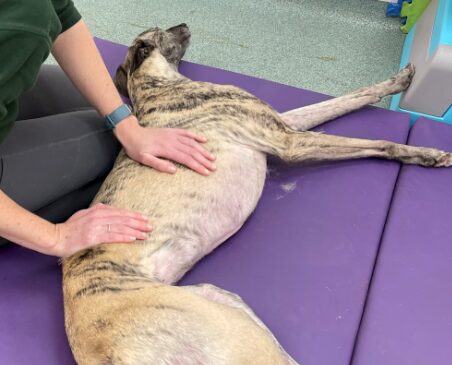
Thorough functional assessment – Including gait assessment, and palpation where applicable.
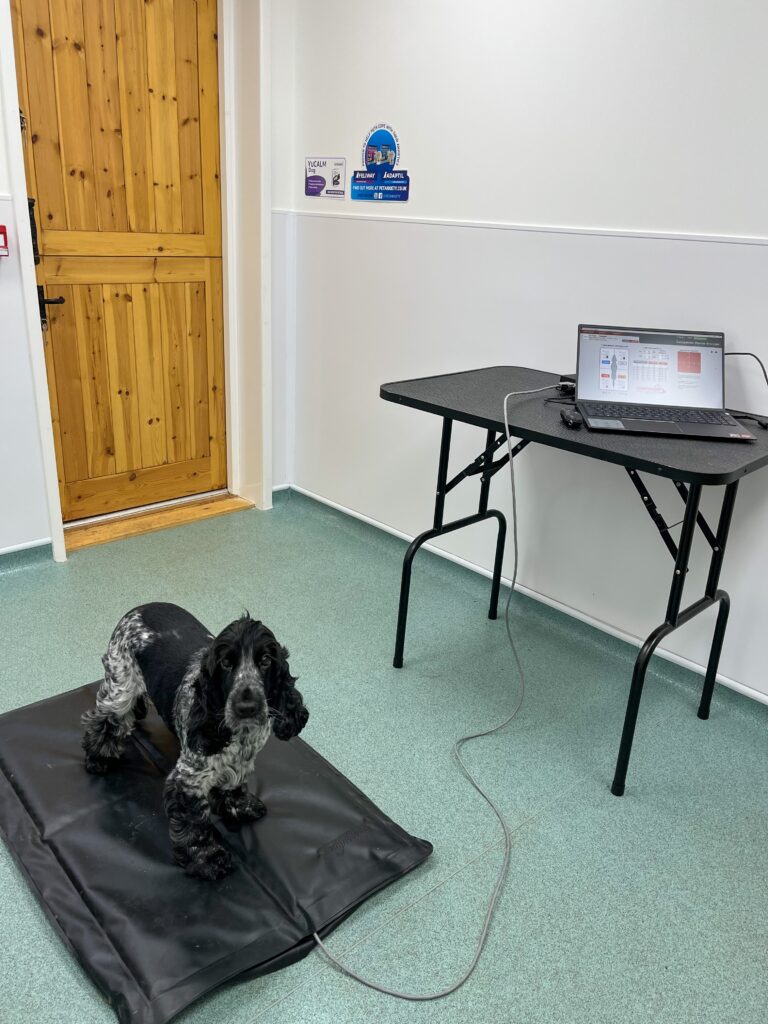
Stance analysis – Using our Companion Animal Health Stance Analyser we can objectively measure the amount of weight your dog puts through each limb.
Manual therapies – include a range of massage techniques and soft tissue mobilisations, as well as stretches and myofascial release.

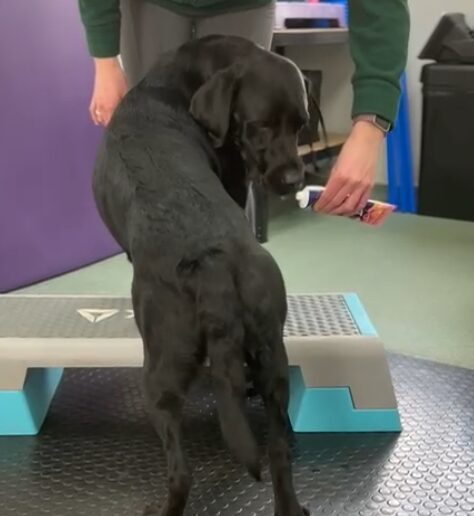
Remedial exercise programmes – a personalised exercise programme, including weight shifting, re-education of gait patterns, muscle strengthening, increased proprioception and co-ordination as well as balance and flexibility.
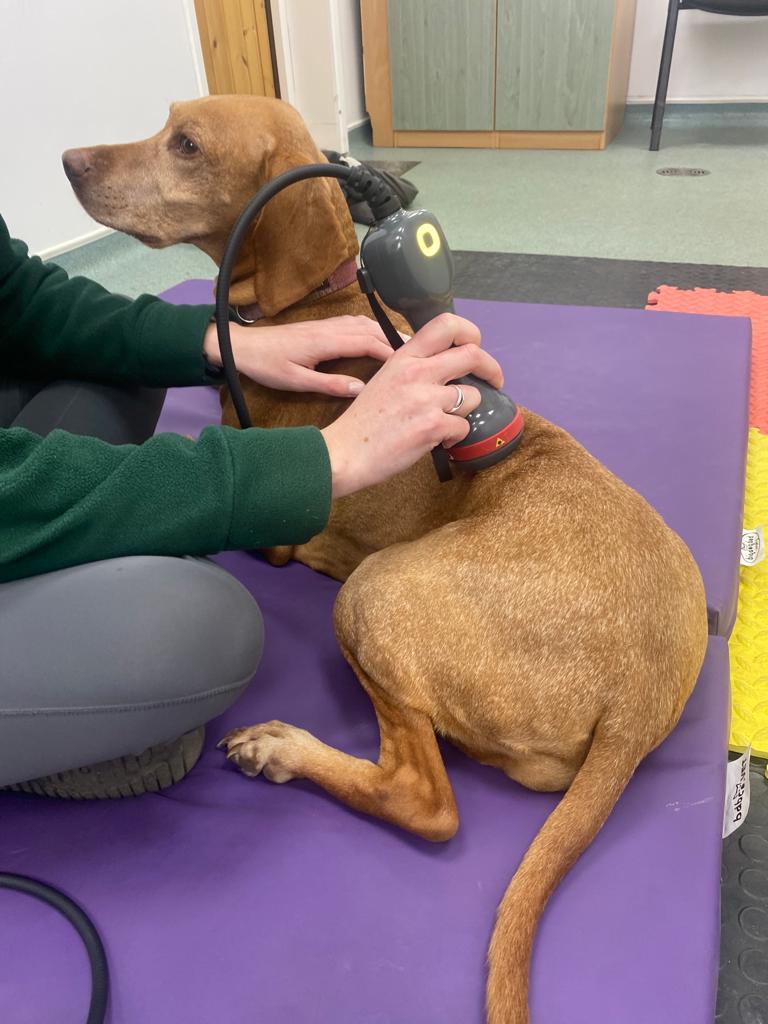
Photobiomodulation – our class IV LASER device can be used for pain relief as well as tissue healing.
Home management advice – often management at home is one of the most key areas to help treat your pet. This might include avoiding slipping on the floor or jumping in and out of the car.